Medical Disclaimer: This article is for informational and educational purposes only and does not constitute medical advice, diagnosis, or treatment. Amblyopia is a developmental vision condition that requires individualized evaluation and care from a licensed pediatric ophthalmologist or qualified eye care professional. Treatment decisions — including the choice between patching, atropine drops, digital therapy, or surgery — should be made in consultation with your child’s eye doctor. Coverage details, FDA clearances, and clinical guidance cited here may change. If your child experiences sudden vision loss, eye pain, or injury, seek urgent medical care immediately.
For nearly 3,000 years, the standard treatment for amblyopia — commonly called “lazy eye” — has been an eye patch. Cover the stronger eye, force the weaker one to work, repeat for hours every day, sometimes for years. It works for many children. It also fails plenty of others, not because the science is wrong, but because asking a four-year-old to wear a patch through preschool is genuinely hard.
That’s finally changing. The last few years have brought FDA-cleared digital therapies, virtual reality systems in active clinical trials, and — crucially for Florida families — expanding insurance coverage that’s making these new options accessible outside research settings. Here’s where things stand for Florida parents in 2026.
What Amblyopia Actually Is
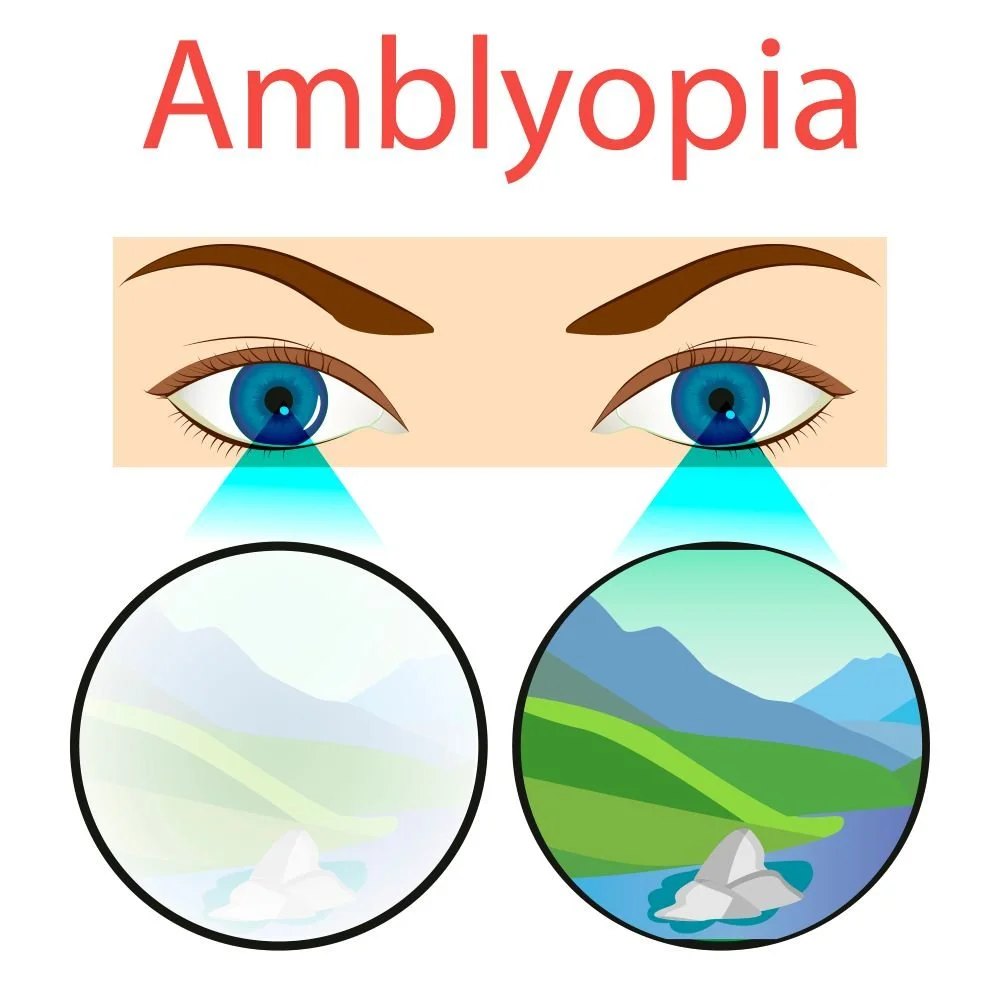
Amblyopia is the most common cause of permanent vision loss in children. It affects roughly 1 in 20 kids, and it isn’t a problem with the eye itself — it’s a problem with how the brain develops vision. When a child’s brain receives a clearer image from one eye than the other (because of a refractive imbalance, eye misalignment, a cataract, or another obstruction), it begins ignoring the weaker eye. Untreated, that suppression becomes permanent.
The visual system is most responsive to treatment before age 7, though newer research suggests meaningful improvement is possible up to age 12 and, in some cases, into adulthood. The earlier the diagnosis, the better the outcome.
In Florida, the Florida Society of Ophthalmology recommends every child between ages 3 and 5 receive a vision screening, with screenings starting as early as 12 months and continuing periodically through childhood. The Florida KidSight Foundation, a partnership with local Lions Clubs, runs free photoscreening for children ages 1 to 6 across the state — particularly important given that fewer than 20% of Florida preschoolers were getting screened a decade ago.
The Traditional Treatments — Still the Foundation
Before the new options, three approaches have carried the field for decades:
- Glasses. The most common cause of amblyopia is uncorrected refractive error. For a meaningful number of children, prescription glasses worn full-time are enough to resolve the condition, especially when caught early.
- Patching (occlusion therapy). A patch over the stronger eye for two to six hours a day, depending on severity. Effective in 70–80% of children under 7.
- Atropine drops. A daily drop in the stronger eye that blurs near vision, accomplishing the same goal as patching without the social stigma. Studies show it’s roughly equivalent to patching in effectiveness, and many children tolerate it better.
These remain first-line treatments and are what most Florida pediatric ophthalmologists will recommend at the outset. None of the newer therapies has been definitively proven superior to these standards — but several offer compelling alternatives when patching or drops aren’t working or aren’t tolerated.
What’s New: Digital and Binocular Therapies
The biggest conceptual shift is this: traditional treatments work by suppressing the stronger eye to force the weaker one. Newer “binocular” or “dichoptic” therapies do the opposite — they show different images to each eye simultaneously, training the brain to use both eyes together.
Luminopia One
A virtual reality headset that displays therapeutically modified TV shows and movies — Sesame Street, SpongeBob, Wild Kratts, and dozens of others. Software splits the image, sending altered versions to each eye to encourage binocular fusion. Originally cleared by the FDA in 2021 for ages 4 to 7, the clearance was expanded in April 2025 to cover children up to age 13.
Prescribed dose: one hour a day, six days a week, for 12 weeks. The pivotal trial showed greater visual acuity improvement than glasses alone, and Anthem Blue Cross Blue Shield added it to covered plans in June 2025.
CureSight
Made by Israeli company NovaSight, CureSight is an at-home eye-tracking system that uses anaglyph (red-blue) glasses to selectively blur the central vision of the dominant eye while a child watches streamed content of their choice. An eye-care professional monitors progress remotely. The 2022 pivotal trial found CureSight non-inferior to patching, and notably, headaches occurred less often with CureSight (4%) than with patching (8%).
CureSight received FDA 510(k) clearance in 2022 and gained meaningful insurance traction in 2025: Anthem began covering it in May, and Aetna designated it medically necessary for amblyopia treatment in July 2025. NovaSight also runs an “Assurance Program” for patients denied reimbursement.
RevitalVision
A computer-based vision training program FDA-cleared for amblyopia in older children and adults. It uses pattern-recognition exercises rather than entertainment content, which makes adherence harder for younger kids but appealing for adolescents and adults exploring late-stage treatment.
Virtual Reality Trials Underway
Beyond cleared products, multiple VR-based therapies are in active clinical trials. The Pediatric Eye Disease Investigator Group (PEDIG), the field’s leading research consortium, is running national multi-site trials with more than 400 testing locations. Several Florida academic centers participate in PEDIG studies, meaning Florida families may have access to investigational treatments through clinical trials at major eye institutes.
A Word on the Evidence
It’s worth being honest about where things stand. As of early 2026, no FDA-cleared digital amblyopia therapy has been definitively proven superior to patching or atropine. Some studies show comparable outcomes; some show modest advantages; some show no added benefit when used alongside standard therapy. Insurance coverage is improving but uneven, and some plans still classify these therapies as investigational. The American Academy of Ophthalmology has called for more head-to-head trials.
What digital therapies clearly do offer is better adherence — kids actually finish the prescribed treatment. For families struggling with patch refusal, that alone can change outcomes.
Where Florida Families Get Care
Florida has a strong pediatric ophthalmology infrastructure, anchored by several nationally recognized centers:
- Bascom Palmer Eye Institute (University of Miami Health System), consistently ranked #1 nationally for eye care by U.S. News & World Report. Locations in Miami, Coral Gables, Palm Beach Gardens, and Naples treat roughly 7,000 children a year.
- University of Florida Department of Ophthalmology (Gainesville), with a dedicated pediatric ophthalmology service.
- Florida Pediatric Ophthalmology & Strabismus (Jacksonville area), led by Dr. David Morrison, formerly Division Director at Vanderbilt.
- Tampa Children’s Eye Clinic & Surgery in the Tampa Bay area.
- Numerous private pediatric ophthalmology practices and academic affiliates statewide.
For free screenings, the Florida KidSight Foundation partners with Lions Clubs across all 67 counties to provide photoscreening for children ages 1 through 6 at preschools, daycares, and community events. Failed screenings are referred for follow-up evaluation.
Insurance Coverage in Florida
Standard treatments — exams, glasses, patching, atropine drops, strabismus surgery — are typically covered by both Florida Medicaid (KidCare) and most private plans for children, though specifics vary by carrier and plan tier.
Digital therapies sit in a more complicated coverage landscape:
- Anthem Blue Cross Blue Shield added CureSight (May 2025) and Luminopia (June 2025) as covered amblyopia treatments.
- Aetna designated CureSight medically necessary in July 2025.
- Other plans vary; some classify these therapies as investigational and decline coverage. Both Luminopia and NovaSight offer patient assistance programs.
If your insurer denies coverage, ask your child’s eye doctor whether an appeal letter documenting medical necessity is appropriate, and inquire about manufacturer assistance programs.
What to Watch For — and When to Act
Amblyopia frequently presents with no obvious symptoms. Young children adapt to their better-seeing eye and don’t complain. Warning signs that warrant an evaluation include:
- Eyes that don’t appear to align (one drifting in, out, up, or down)
- Squinting, head tilting, or covering one eye
- Difficulty with depth perception
- A family history of amblyopia, strabismus, congenital cataracts, or significant refractive error
- Failed pediatrician or school vision screening
The single most important thing parents can do is ensure their children get screened on schedule — at well-child visits, between ages 3 and 5, and periodically thereafter. Early detection is the difference between a treatable condition and permanent vision loss.
The Bottom Line
The treatment landscape for amblyopia is changing for the better. Florida families now have access to FDA-cleared digital therapies that didn’t exist five years ago, and insurance coverage is steadily improving. The traditional approaches — glasses, patching, atropine — still work and remain first-line for good reason. But for children who can’t tolerate them, or whose parents have struggled with adherence, real alternatives now exist.
The right path depends on your child’s age, the type and severity of their amblyopia, their personality, your family’s daily realities, and your insurance situation. None of that can be sorted out from an article. It’s a conversation to have with a pediatric ophthalmologist who can examine your child and walk you through options.
If your child hasn’t had a vision screening recently, that’s the place to start.
Disclaimer (repeated): This article does not provide medical advice, diagnosis, or treatment recommendations. Information about therapies, FDA clearances, and insurance coverage was accurate to the best of the author’s knowledge at the time of writing and is subject to change. The mention of specific products, clinics, or programs is for informational purposes only and does not constitute endorsement. Consult a licensed Florida pediatric ophthalmologist or qualified eye care professional before making any decisions about your child’s vision care. If your child has a vision-related emergency, seek urgent medical care or call 911.
For Free Screenings: Florida families can access free vision screening for children ages 1–6 through the Florida KidSight Foundation in partnership with local Lions Clubs. Visit floridakidsight.com or contact your local Lions Club for screening locations.