May 3, 2026
Florida is one of the most rewarding places in America to be a senior. The weather is warm, the lifestyle is active, the healthcare infrastructure is among the most extensive in the country, the senior community is enormous and welcoming, and there’s no state income tax to chip away at retirement savings.
But Florida living also comes with a unique set of health challenges that many transplants — and even longtime residents — underestimate. The combination of intense year-round UV exposure, high humidity, hurricane season, mosquito-borne illnesses, dehydration risk, heat-related illness, and the practical realities of being older in a state where roughly 21% of the population is age 65+ creates a healthcare reality that requires intentional, proactive management.
Florida has the highest concentration of seniors in America, with more than 4.5 million residents over age 65 and that number growing daily. Communities like The Villages, Naples, Sarasota, Boca Raton, Palm Beach, Stuart, Vero Beach, Fort Myers, and dozens of others are built specifically around senior life. The state’s massive healthcare ecosystem — anchored by AdventHealth, Mayo Clinic Florida, Cleveland Clinic Florida, Baptist Health, BayCare, Orlando Health, Tampa General, and dozens of others — is uniquely equipped to serve aging patients.
But excellent infrastructure isn’t enough. Living well as a senior in Florida’s intense sun and humidity requires personal practices that go beyond what most physicians cover in a typical 15-minute appointment.
This is the comprehensive 2026 guide to 12 health care practices every senior living in Florida should know, follow, and revisit annually. Whether you’re a snowbird with seasonal Florida residence, a recent retirement transplant, or a longtime Floridian, these are the habits that separate seniors who thrive in Florida from those who quietly accumulate preventable problems.
1. Make Sun Protection a Daily Non-Negotiable
Skin cancer is the most common cancer in the United States, and Floridians face dramatically higher risk than residents of nearly any other state. One in five Americans will develop skin cancer by age 70 — and Florida seniors face significantly elevated risk after decades of cumulative UV exposure.
The practices:
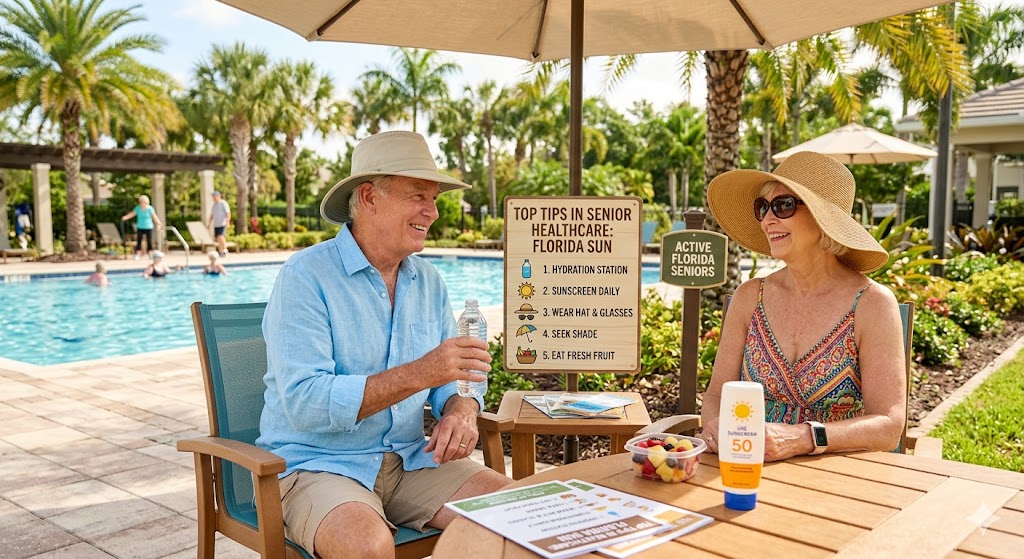
- Wear broad-spectrum sunscreen of SPF 30 or higher daily, even on cloudy days and even when you’re “just running errands.”
- Reapply every two hours when outdoors, and after swimming or sweating.
- Wear UPF-rated clothing, wide-brim hats, and UV-blocking sunglasses for outdoor activities.
- Avoid peak UV hours between 10 AM and 4 PM when possible — this is when intensity in Florida is highest.
- Get a full-body skin check from a dermatologist annually, more often if you have a history of sun damage or skin cancer.
- Learn to self-examine. Check yourself monthly for new moles, changing spots, or anything that itches, bleeds, or doesn’t heal.
Florida’s UV index regularly hits 10-12 (very high to extreme), even in winter. The sun damage accumulating in February in Naples is comparable to what you’d see in July in Maine. There’s no “off-season” for sun protection in Florida.
Florida-Specific Tip
If you’re outdoors regularly — golfing, walking the beach, gardening, attending pickleball — invest in proper UV-blocking apparel. Brands like Coolibar, BloqUV, and Solbari make UPF 50+ clothing designed for warm climates that doesn’t trap heat. Your dermatologist will thank you in 10 years.
Brian’s Take: Florida Sun Damage Compounds Silently and Hits Hardest in Your 70s and 80s.
The skin damage Florida seniors are dealing with today is largely from sun exposure that happened decades ago, and the damage they’re accumulating right now will show up as cancers, sun spots, and aging issues in 10 to 20 years. Treating sun protection like brushing your teeth — boring, daily, non-negotiable — is one of the highest-leverage health habits any Florida senior can build.
— Brian
2. Stay Aggressively Hydrated, Especially in Summer
Older adults have a reduced sense of thirst, meaning Florida seniors can become significantly dehydrated before they even feel thirsty. Combine that with Florida’s heat, humidity, common diuretic medications (for blood pressure, heart conditions, etc.), and an active outdoor lifestyle, and dehydration becomes one of the most common — and most preventable — emergency room visits among Florida seniors.
The practices:
- Drink water consistently throughout the day, not just when thirsty. Aim for 8-10 cups of fluids daily, more on hot days.
- Carry water with you everywhere. A reusable water bottle is one of the simplest senior health investments you can make.
- Add electrolytes when active or in extreme heat. Sugar-free electrolyte products like LMNT, Liquid IV (sugar-free), or simple pinch-of-salt-and-lemon water work well.
- Limit alcohol and caffeine in extreme heat — both contribute to dehydration.
- Watch medications. Diuretics, ACE inhibitors, and certain blood pressure medications can dramatically increase fluid loss. Talk to your doctor.
- Recognize early dehydration signs. Dry mouth, dark yellow urine, fatigue, dizziness, headaches, and confusion. Confusion in particular can be mistaken for dementia in older adults but is often dehydration.
Florida-Specific Tip
In Florida summers, indoor air conditioning can also dehydrate you. Don’t assume you only need to drink water when you’re outside. Many Florida seniors live in heavily air-conditioned homes and are quietly losing fluid all day.
3. Manage Heat and Humidity Proactively
Heat-related illness — including heat exhaustion and heatstroke — is one of the leading causes of preventable senior emergency hospitalizations in Florida. Older adults are particularly vulnerable because:
- Reduced ability to regulate body temperature
- Decreased sweat response
- Common medications that affect heat regulation
- Underlying cardiovascular and respiratory conditions
- Decreased thirst response leading to dehydration
The practices:
- Schedule outdoor activities for early morning or evening during summer months. The hours between 10 AM and 4 PM should be indoor time during peak summer.
- Use air conditioning aggressively. This isn’t a luxury for Florida seniors. It’s a medical necessity. Don’t try to “tough out” hot days.
- Have a backup cooling plan. Power outages happen. Know where your nearest cooling center is, have a battery-powered fan, and consider a generator if you’re medically vulnerable.
- Dress for the climate. Light-colored, loose-fitting, breathable fabrics. Avoid dark colors during peak sun.
- Take cool showers when temperatures spike, particularly before sleep.
- Know the signs of heat stroke: confusion, hot dry skin (no sweating), high body temperature, rapid pulse, nausea, headache. Heat stroke is a medical emergency. Call 911.
- Check on neighbors and friends during heat waves. Florida seniors who live alone are particularly vulnerable, and a daily check-in saves lives.
Florida-Specific Tip
Hurricane season runs June through November. If you have medical conditions requiring electricity (oxygen, CPAP, refrigerated medications, electric mobility devices), register with your county’s Special Needs Registry well before storm season. This isn’t optional. Make the call now.
4. Prevent Falls — The #1 Hidden Health Threat for Florida Seniors
Falls are the leading cause of injury-related death among seniors in Florida and across the country. According to the CDC, one in four Americans age 65+ falls each year, and many of those falls result in serious injuries — hip fractures, head trauma, hospitalizations that often begin a long downward health spiral.
Florida adds unique fall risks: tile floors common in Florida homes are slippery, lanais and pool decks can be wet, sand can be unstable, and the lure of an active outdoor lifestyle (pickleball, golf, beach walks) increases mobility-related risk.
The practices:
- Have a comprehensive fall risk assessment with your physician annually after age 65.
- Get a physical therapy evaluation to identify balance, strength, and gait issues. Medicare typically covers this.
- Strength train at least twice weekly. Lower-body and core strength prevent the vast majority of falls. Yoga, tai chi, and resistance training are particularly effective.
- Have your vision checked annually. Cataracts and macular degeneration dramatically increase fall risk.
- Review your medications with your doctor or pharmacist. Many common medications — sedatives, blood pressure medications, sleep aids, certain antidepressants — significantly increase fall risk.
- Home-proof your living space. Remove loose rugs, install grab bars in bathrooms, ensure adequate lighting, eliminate trip hazards, use non-slip mats.
- Wear supportive footwear, even at home. No flip-flops on tile floors. Closed-back, supportive shoes prevent more falls than people realize.
- Get a medical alert system if you live alone. Companies like Life Alert, Medical Guardian, and Apple Watch fall detection can save lives.
Florida-Specific Tip
Be especially careful at pools and lanais. Wet tile is one of the most dangerous surfaces in any home. Use non-slip pool deck coatings, take corners slowly, and never run on wet pool decks regardless of how fit you feel.
Brian’s Take: Strength Training Is the Single Most Important Health Investment Florida Seniors Can Make.
Most Florida seniors over-invest in cardio and under-invest in strength training, which is exactly backward — the muscle and balance you build lifting weights twice a week is what prevents the falls, fractures, and hospitalizations that cause the cascading health declines families fear most. Find a Florida-based trainer who specializes in older adults, get a beginner program, and treat it as non-negotiable medicine.
— Brian
5. Build a Real Florida Healthcare Team — Don’t Wing It
Florida has world-class healthcare resources, but they don’t help if you haven’t connected with them. Many seniors — particularly snowbirds and recent transplants — try to manage their Florida healthcare through their out-of-state primary care physician via phone calls and quick visits. This is a recipe for missed care, fragmented prescriptions, and avoidable problems.
The practices:
- Establish a Florida-based primary care physician who knows you and is accessible year-round.
- Identify Florida specialists for any chronic conditions you manage — cardiologist, endocrinologist, gastroenterologist, oncologist if applicable, etc.
- Find a trusted dermatologist for annual skin cancer checks.
- Establish a relationship with a Florida ophthalmologist or optometrist for annual eye exams.
- Choose a local pharmacy and use it consistently. Pharmacist relationships catch dangerous drug interactions and improve adherence.
- Identify a local hospital and emergency room appropriate to your conditions before you need it. Mayo Clinic Florida, Cleveland Clinic Florida, Tampa General, AdventHealth, Baptist Health, Orlando Health, and many others are highly rated.
- Have a Florida dentist. Dental health and overall health are tightly connected.
- Consider a Florida-based geriatrician if you have multiple chronic conditions.
Florida-Specific Tip
If you’re a snowbird, having parallel medical teams in your home state and Florida is important. Make sure they communicate, share records, and aren’t duplicating or conflicting prescriptions. Many Florida concierge medicine practices specialize in coordinating care for seasonal residents.
6. Take Mosquito and Tick Protection Seriously
Florida hosts mosquito-borne illnesses that are increasingly common and dangerous for older adults: West Nile virus, Eastern Equine Encephalitis, dengue fever (now locally transmitted in Florida), Zika virus, and others. Tick-borne illnesses including Lyme disease and Rocky Mountain spotted fever also occur in Florida.
For seniors, these illnesses can be more severe, more likely to require hospitalization, and more likely to have long-term complications.
The practices:
- Use EPA-registered insect repellent containing DEET (20-30%), picaridin, or oil of lemon eucalyptus when outdoors during dawn/dusk peak mosquito hours.
- Wear long sleeves and pants when in mosquito-heavy areas, particularly near standing water.
- Eliminate standing water around your home weekly. Mosquitoes breed in tiny amounts of water — flowerpots, gutters, bird baths, kids’ pools.
- Install or maintain window/door screens.
- Be aware of recent illness reports. Florida county health departments track local mosquito-borne disease outbreaks.
- Know the symptoms: sudden fever, headache, body aches, fatigue, rash, or neurological symptoms after outdoor exposure should prompt immediate medical attention.
Florida-Specific Tip
After hurricanes and major rainstorms, mosquito populations explode. Be extra vigilant about repellent and standing water for several weeks after storms.
7. Master Your Medications — and Review Them Regularly
The average American senior takes 4-5 prescription medications, and the typical Florida senior often takes more given the aging population’s higher rate of chronic conditions. Polypharmacy (taking multiple medications) significantly increases the risk of dangerous interactions, side effects, falls, cognitive issues, and hospitalizations.
The practices:
- Have an annual medication review with your primary care physician. Specifically ask: “Is there anything on this list I no longer need?”
- Use a single pharmacy that knows your full medication picture.
- Use a pill organizer with daily compartments. The simple weekly pill box prevents more medication errors than any technology.
- Set reminders. Smartphone apps, alarm clocks, automated pill dispensers — find what works.
- Know what each medication does and why you take it. If you can’t explain it, ask your doctor.
- Be aware of dangerous drug-drug, drug-supplement, and drug-food interactions. Common offenders include grapefruit juice (statins), warfarin (multiple foods), and certain herbal supplements.
- Don’t share medications — ever, with anyone.
- Properly dispose of expired or unused medications at pharmacy take-back programs.
- Update your medication list before every appointment and carry a printed copy in your wallet.
Florida-Specific Tip
Florida’s heat can damage temperature-sensitive medications. Insulin, certain biologics, and some other medications require refrigeration. Have a backup plan for power outages — cooler with ice packs, or a small backup refrigerator if you have life-critical medications.
Brian’s Take: Medication Reviews Are the Most Underused High-Impact Health Tool for Florida Seniors.
Most Florida seniors collect medications over decades from different doctors for different reasons, and over time that pile becomes a tangled mess that nobody — including the patient — can fully explain. A single 30-minute medication review with a thoughtful primary care physician or pharmacist can eliminate unnecessary prescriptions, prevent dangerous interactions, and dramatically improve quality of life in ways no new pill ever will.
— Brian
8. Stay Socially Connected — Loneliness Kills
Loneliness is a silent killer among Florida seniors. Many have moved to Florida from out-of-state, leaving behind decades of friends, family, and community. Snowbirds split between two homes often feel rootless in both. Spouses pass away. Friends move away or pass on. The risk of social isolation is real, and the health consequences are severe.
Research has repeatedly shown that social isolation increases the risk of dementia, cardiovascular disease, depression, and early mortality at levels comparable to smoking 15 cigarettes per day.
The practices:
- Join community organizations. Florida has the most extensive senior community infrastructure in America — clubs, classes, religious organizations, volunteer opportunities, hobby groups, sports leagues.
- Stay connected with family. Schedule regular video calls, visits, and texting check-ins.
- Cultivate friendships within your community. Florida’s 55+ communities (The Villages, Sun City Center, Ave Maria, Solivita, Latitude Margaritaville, etc.) are built specifically for connection.
- Volunteer. Florida nonprofits, hospitals, schools, and community organizations actively recruit senior volunteers.
- Join a faith community if appropriate to you.
- Consider a part-time job or consulting work if it fits your situation. Productive engagement supports mental health.
- Take classes. Florida has extensive Lifelong Learning programs through institutions like the OLLI (Osher Lifelong Learning Institute) program at multiple Florida universities.
- Watch for signs of depression in yourself and loved ones — withdrawal, sleep changes, appetite changes, hopelessness. Depression is highly treatable but often missed in seniors.
Florida-Specific Tip
If you’re new to Florida, prioritize building social connections during your first 12-24 months. Many transplants experience significant emotional challenges in their first year of Florida residency due to lost community. Join 2-3 things, even if you don’t feel like it.
9. Maintain Active Cognitive Health
Cognitive decline isn’t inevitable. While Alzheimer’s and other dementias remain serious health concerns, research increasingly shows that lifestyle factors significantly influence cognitive aging. Florida seniors have an unusual advantage: more leisure time to invest in brain health than they ever had during their working years.
The practices:
- Engage in regular cognitive challenges. Crosswords, Sudoku, language learning, musical instruments, strategic games like chess and bridge.
- Stay physically active. Exercise is one of the most powerful interventions for cognitive health. Walking, swimming, cycling, dance, yoga, tai chi all support brain function.
- Learn new skills regularly. Novel learning is more brain-protective than repeating familiar tasks.
- Read consistently. Books, magazines, newspapers — diverse, sustained reading exercises memory and processing.
- Manage cardiovascular health aggressively. What’s good for your heart is good for your brain. Blood pressure, cholesterol, blood sugar control all directly affect dementia risk.
- Get quality sleep. Sleep is when the brain clears metabolic waste. 7-8 hours of quality sleep significantly supports cognitive health.
- Limit alcohol. Excessive alcohol accelerates cognitive decline.
- Address hearing loss. Untreated hearing loss is associated with significantly increased dementia risk. Get hearing tested annually.
- Know the warning signs of cognitive decline and seek evaluation early — significant memory changes, language difficulties, personality changes, getting lost in familiar places.
Florida-Specific Tip
Many Florida communities offer brain health programs through hospitals (Mayo Clinic Jacksonville, Cleveland Clinic Florida, USF Health, etc.), the Alzheimer’s Association of Florida chapters, and local senior centers. Use them.
10. Eat for Florida Living — Mediterranean-Style with Local Sourcing
Florida’s climate, agriculture, and seafood economy make it one of the easiest states in America to eat well. Year-round access to fresh produce, world-class seafood, citrus, avocados, and farm-to-table options gives Florida seniors significant advantages most American seniors don’t have.
The practices:
- Prioritize a Mediterranean-style eating pattern. Lots of vegetables, fruits, whole grains, fish, healthy fats (olive oil, avocados, nuts), legumes, and lean proteins.
- Eat fish twice weekly. Florida’s coastal economy makes high-quality fish accessible. Snapper, grouper, mahi-mahi, salmon, sardines all support cardiovascular and brain health.
- Limit ultra-processed foods. The single highest-impact dietary improvement for most seniors.
- Watch sodium intake. Critical for blood pressure management — particularly in Florida heat where sodium balance affects fluid retention and cardiovascular load.
- Maintain protein intake. Older adults need MORE protein, not less, to preserve muscle mass. Aim for protein at every meal.
- Stay hydrated (covered in practice #2).
- Limit alcohol. Even moderate drinking has stronger health impact in older adults.
- Watch for unintentional weight loss. Significant weight loss in seniors is often a warning sign of underlying conditions and should prompt medical evaluation.
- Use Florida farmers’ markets. Almost every Florida community has weekly farmers’ markets featuring local produce, meats, and seafood.
Florida-Specific Tip
Florida is home to extraordinary citrus, avocados, mangoes, and tropical produce. Take advantage of seasonal Florida foods — they’re fresher, more nutrient-dense, and often more affordable than imported alternatives.
11. Plan for Hurricane Season Like Your Health Depends on It (Because It Does)
Hurricane season runs June 1 through November 30 every year, and Florida seniors are disproportionately affected. Power outages, evacuations, displaced medications, disrupted medical care, mobility challenges, and post-storm chaos all create serious health risks for older adults.
The practices:
- Have a hurricane medical plan before storm season starts.
- Maintain a 30-day supply of all critical medications during hurricane season.
- Register with your county’s Special Needs Registry if you have medical conditions requiring electricity, oxygen, or special transportation.
- Identify your evacuation destination — family member’s home, hotel, friend’s home — and the route well in advance.
- Keep important medical records accessible — list of medications, allergies, emergency contacts, physician names, insurance info. Both paper copy and digital backup.
- Have emergency supplies for at least 7 days — water, non-perishable food, flashlights, batteries, first aid kit, basic tools.
- Know your home’s vulnerabilities — flood zone, evacuation zone, structural concerns.
- Have a plan for pets if applicable.
- Maintain a generator or know how to access cooling centers if you medically require power.
- Communicate your plan to family members out of state. They should know what you’re doing and when.
Florida-Specific Tip
The Florida Division of Emergency Management’s website (floridadisaster.org) has senior-specific hurricane preparation resources. Bookmark it. Use it.
12. Schedule Preventive Care — and Actually Show Up
Preventive care is the foundation of healthy senior living, and Florida’s healthcare infrastructure is built to deliver it. Yet many seniors skip annual checkups, screenings, vaccinations, and preventive services that would catch problems early.
The practices:
- Annual physical exam with your primary care physician.
- Annual skin cancer check with a dermatologist.
- Annual eye exam including glaucoma and macular degeneration screening.
- Hearing test every 1-2 years.
- Dental cleanings every 6 months.
- Cancer screenings appropriate to your age and risk factors:
- Mammograms (women)
- Colonoscopies (per current guidelines)
- Prostate screening (men, per shared decision-making with your doctor)
- Lung cancer screening if you’re a current or former smoker
- Bone density screening for osteoporosis (women generally starting at 65, men at 70).
- Cardiovascular screenings including blood pressure, cholesterol, and diabetes screening.
- Vaccinations:
- Annual flu shot
- COVID-19 vaccinations per current recommendations
- Pneumococcal vaccines
- Shingles vaccine (recommended for adults 50+)
- Tdap booster every 10 years
- RSV vaccine for adults 60+ per current guidelines
- Mental health checkups. Depression and anxiety are common and treatable.
- Cognitive assessments if you or family members notice changes.
Florida-Specific Tip
Medicare Advantage plans in Florida often include preventive care benefits beyond traditional Medicare — including transportation to appointments, in-home health assessments, and specialty consultations. If you’re in a Medicare Advantage plan, learn what’s actually included.
Brian’s Take: Florida Senior Healthcare Works When You Treat It as a Team Sport.
The seniors who thrive in Florida long-term aren’t doing it alone — they have a primary care physician, a few key specialists, a pharmacist they actually know, family members in the loop, neighbors who check in, and a community that notices when something seems off. Build that team intentionally before you need it, because the seniors who try to manage Florida healthcare by themselves are the ones who miss the warning signs that everyone else would have caught.
— Brian
The Bottom Line: Florida Senior Living Is a Privilege Worth Protecting
Florida is one of the great places in the world to live as a senior — when you do it right.
The state’s combination of climate, infrastructure, community, and healthcare gives Florida seniors options most retirees in other states don’t have. World-class medicine. Active outdoor lifestyle. Year-round social opportunities. Tax advantages. Cultural diversity. Genuine community.
But thriving in Florida as a senior isn’t automatic. The same sun that warms you damages your skin. The same humidity that makes your January walk pleasant can dehydrate you in July. The same active lifestyle that keeps you young increases fall risk if you don’t train for it. The same beautiful pool deck can be slippery. The same hurricane season that puts a few inches of rain in your yard can also disrupt your medical care for weeks.
The 12 practices in this guide aren’t optional. They’re the difference between Florida seniors who genuinely thrive into their 80s and 90s and those who quietly accumulate preventable health problems.
Pick one. Start it this week. Add another in 30 days. Build the habits one at a time.
Your future self — the version of you walking on the beach at 85, playing pickleball at 80, watching grandchildren grow at 90 — is being created right now by the choices you make this month, this week, today.
Florida is a remarkable place to grow older. It rewards seniors who take care of themselves. It punishes those who don’t.
Choose to be in the first group.
Your Florida is waiting.
Resources & Further Reading
- Florida Department of Elder Affairs — The state agency providing comprehensive resources for Florida seniors, including the Elder Helpline (1-800-963-5337), nutrition programs, in-home services, and elder rights protections.
- Florida Division of Emergency Management: Special Needs Registry — Registration for Florida seniors with medical conditions requiring assistance during hurricanes and disasters.
- Centers for Disease Control and Prevention: Older Adult Health — Authoritative federal resource on senior health topics including falls prevention, vaccinations, and chronic disease management.
- Medicare.gov — The official federal Medicare website for understanding coverage, finding Florida providers, and managing your benefits.
- Florida Department of Health: County Health Departments — County-level public health resources for mosquito-borne illness alerts, vaccination clinics, and local health information.
- Alzheimer’s Association of Florida — Comprehensive resources on cognitive health, dementia care, support groups, and brain health programming across Florida.
- American Academy of Dermatology: Skin Cancer Resources — The leading authority on skin cancer prevention, detection, and treatment — recommended reading for Florida seniors with high cumulative sun exposure.
Disclaimer
The information provided in this article is for general educational and informational purposes only and is not intended as, and should not be construed as, medical advice, diagnosis, or treatment. The content reflects general practices and lifestyle considerations but is not a substitute for personalized care from a qualified healthcare professional. Always consult your physician, pharmacist, or licensed Florida healthcare provider before starting, stopping, or changing any medication, supplement, treatment, exercise routine, or screening schedule.
References to specific conditions, screenings, vaccines, medications, or providers are illustrative and may not apply to your individual circumstances. Coverage details for Medicare, Medicaid, or private insurance can change; verify benefits directly with your plan and the Florida Department of Elder Affairs or SHINE program (1-800-963-5337) for current guidance.
In a medical emergency, call 911 immediately. Florida Medical News, its authors, and contributors disclaim any liability for actions taken or not taken based on the content of this article. Reliance on any information provided here is solely at your own risk